
First Impressions of Thymio 3 Educational Robot by Mobsya (Pre-release Research)
Post Contents
- 1 First Impressions of Thymio 3 Educational Robot by Mobsya (Pre-release Research)
- 1.1 A Brief History of Thymio
- 1.2 First Impressions of Thymio3
- 1.3 What We Know So Far
- 1.4 What FCC Documents Reveal About Thymio3
- 1.5 What’s New in Thymio 3?
- 1.6 New Sensors and Capabilities
- 1.7 Audio and Storage
- 1.8 All-New LED Light Shows?
- 1.9 What Are People Building With Thymio 3?
- 1.10 Is It Worth Upgrading?
- 1.11 Final Impressions of Thymio 3
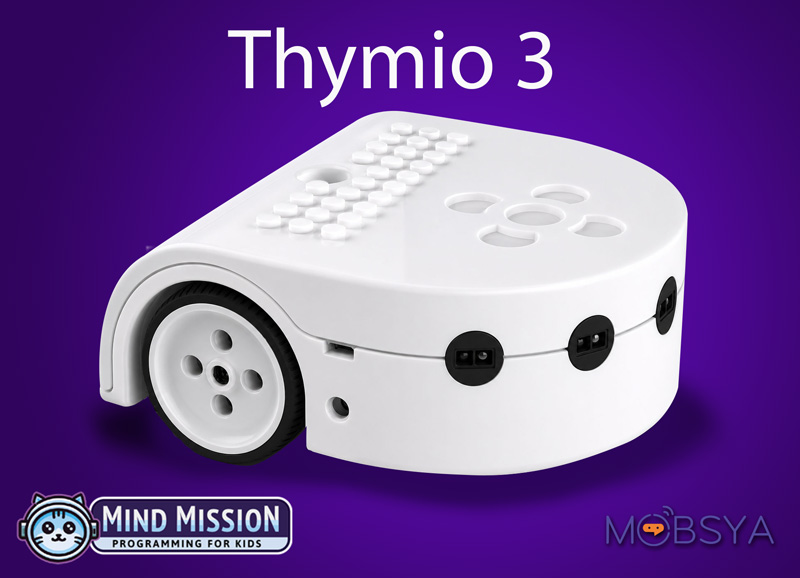
📌 Pre-Release AnalysisAt the time of writing, Thymio 3 has been announced by Mobsya but has not yet been officially released. The observations in this article are based on public documentation, FCC certification filings, software repositories, and early community projects that provide insight into the upcoming platform.
As additional information becomes available, we’ll continue updating this article with confirmed specifications, classroom applications, and hands-on testing results.
After more than a decade in classrooms around the world, the Thymio educational robot is preparing for its biggest change yet.
While Mobsya has not officially launched the robot at the time of writing, recent information shared through a LinkedIn announcement, an early user manual, and several public software repositories have given us a surprisingly detailed glimpse into what appears to be the next generation of the platform.
You can see the initial announcement from Mobsya here:
And an early Thymio3 user manual here:
Based on those sources, along with several publicly available Thymio3 software projects, we now have a fairly good idea of what’s coming.
The question is not whether Thymio 3 is more advanced than Thymio II. For a detailed list of Thymio II’s features and accessories, head over to the Thymio II page on BINGOBONGO Learning. And for a comprehensive list of lessons using Thymio II, check out the MindMission.pro lesson section.
The more interesting question is whether those advancements will benefit the majority of classrooms that made Thymio successful in the first place.
A Brief History of Thymio
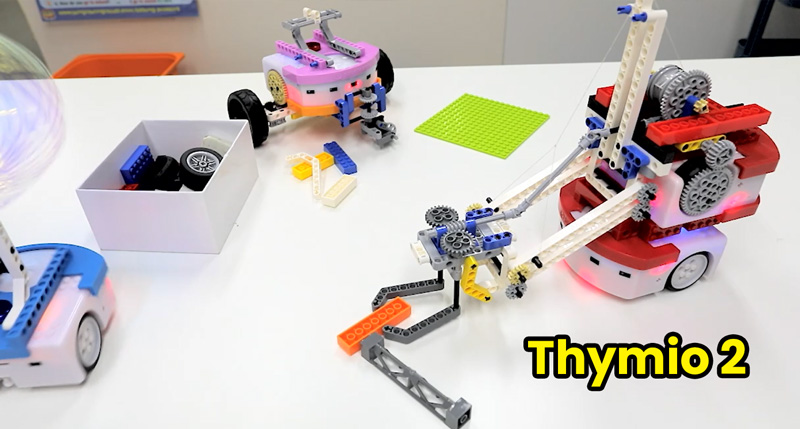
Since its introduction, Thymio II has become one of the most widely used educational robots in schools, makerspaces, and robotics programs.
Part of its success came from its simplicity.
Students could begin with visual programming and gradually progress into more advanced concepts. Teachers could introduce robotics without requiring extensive technical knowledge, and over the years an impressive Thymio Wikidot community developed around the platform.


Alongside the robot itself came:
- Classroom lesson plans
- Engineering challenges
- Building projects
- LEGO-based activities
- Community-created accessories
- Add-ons such as the LinkVest
The result was much more than a robot. It became an educational ecosystem.
With Thymio 3, Mobsya appears to be taking the platform in a new direction, introducing technologies more commonly associated with modern embedded systems and connected devices.
First Impressions of Thymio3
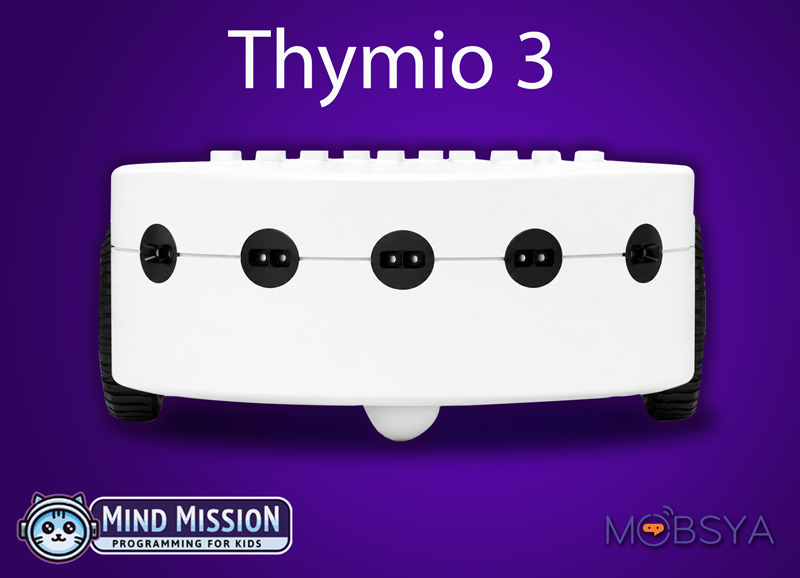
At first glance, Thymio 3 is immediately recognizable as a Thymio.
The familiar white design remains, as do the touch buttons, LEDs, and LEGO-compatible mounting points.
However, the overall shape has changed significantly.
The new design appears more rounded than Thymio II while maintaining a very similar overall footprint. Recent FCC certification photographs include ruler references that suggest the robot measures approximately 110 × 110 mm, compared to the published 112 × 112 mm dimensions of Thymio II.
In other words, the overall size appears largely unchanged, even if the body styling has been modernized.
Thymio 3 (Estimated from FCC Photos)
Thymio II (Official)
The redesign gives the robot a more modern appearance, but it may also require educators to revisit some existing engineering activities and accessories developed around the original footprint.
Programs that rely heavily on physical construction, custom mounts, or systems such as the LinkVest may require some adaptation before they can be used with the new platform.
What We Know So Far
Much of the information currently available comes from software repositories published by Mobsya, FCC certification documents, and developers experimenting with the platform.
Together, these sources reveal considerably more than the current user manual and provide an unusually detailed look at the hardware before its official release.
What FCC Documents Reveal About Thymio3
While user manuals and software repositories provide valuable clues, some of the most interesting information comes from publicly available FCC certification documents and internal photographs.
These filings provide an unusually detailed look inside Thymio3 before its official release.
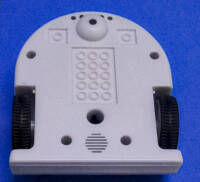
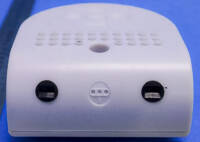
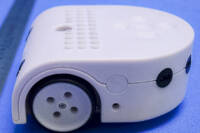
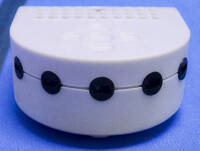
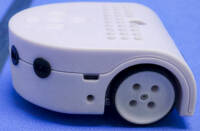
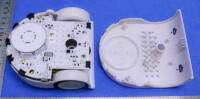
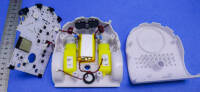
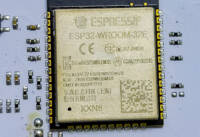
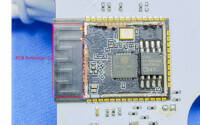
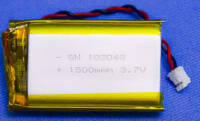
Several hardware details can now be confirmed:
- ESP32-WROOM-32E wireless module
- Integrated Wi-Fi support
- Bluetooth Classic and Bluetooth Low Energy (BLE)
- USB-C connectivity
- Dual-processor architecture (ESP32 + STM32)
- 1500 mAh 3.7V lithium battery
- Integrated LEGO-compatible mounting points underneath the robot
Perhaps most interesting is the confirmation that Thymio 3 includes built-in Wi-Fi hardware. While most early discussions have focused on Bluetooth connectivity, the presence of an ESP32 module suggests the platform may eventually support much more advanced networking and IoT applications than previous generations.
Integrated LEGO Mounting System
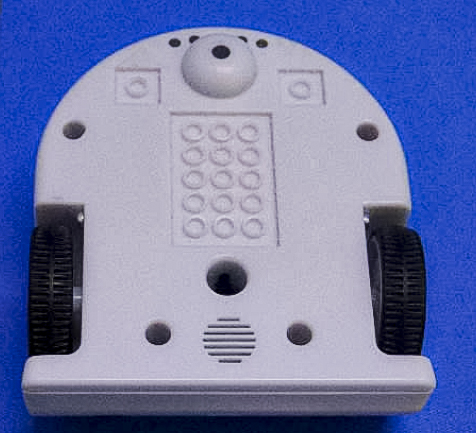
FCC teardown photographs reveal another interesting design change.
In addition to the familiar LEGO-compatible mounting area on top of the robot, Thymio 3 now includes a molded LEGO-compatible anti-stud grid on the underside of the chassis.
This allows LEGO structures to attach directly beneath the robot without requiring additional mounting accessories.
Many educators and makers have spent years integrating Thymio II into LEGO-based engineering projects, custom frames, classroom challenges, and systems such as the LinkVest. The addition of dedicated mounting points underneath the robot suggests Mobsya has taken those real-world classroom uses into account during the redesign.
For engineering-focused activities, this may prove to be one of the most practical hardware changes introduced in Thymio 3.
Thymio II vs Thymio 3
What’s New in Thymio 3?
Dual Processor Architecture
One of the most significant technical changes appears to be a dual-processor design.
Firmware references indicate that Thymio 3 contains both an ESP32 and STM32 microcontroller.
This architecture likely separates wireless communication, storage, and Python execution from real-time motor and sensor control.
For advanced users and developers, this creates a much more capable platform than the original Thymio II.
Built-In Bluetooth
Bluetooth Low Energy (BLE) appears to be integrated directly into the robot.
While Thymio II already supports wireless operation through its USB dongle and Thymio Suite, the move to native Bluetooth should simplify setup and open the door to browser-based projects using Web Bluetooth.
Several developers have already demonstrated direct communication between web applications and Thymio 3 without requiring additional hardware. Thanks to built-in Bluetooth and Wi-Fi support confirmed through FCC filings, the new platform appears well positioned for browser-based and connected-device projects.
MicroPython Support
MicroPython is perhaps the feature that will attract the most attention.
For students interested in embedded systems, IoT, and modern programming workflows, MicroPython provides a path into technologies commonly used on ESP32-based devices.
That said, many of the core programming concepts taught through MicroPython can already be explored using Scratch, Blockly, and Aseba on Thymio II.
The difference is less about what students can learn and more about the tools they use to learn it.
Built-In Wi-Fi and Connected Projects
One surprising discovery from the FCC documentation is that Thymio 3 appears to include full Wi-Fi hardware through its ESP32 module.
While Mobsya’s current documentation primarily focuses on Bluetooth connectivity, the hardware itself is capable of much more.
This aligns with several community projects already appearing online, including systems that combine Thymio 3 with:
- MQTT messaging
- Web applications
- Remote control interfaces
- Computer vision systems
- AI cameras
For advanced learners, this could potentially open the door to projects involving networking, cloud communication, remote monitoring, and Internet of Things (IoT) concepts.
New Sensors and Capabilities
One thing worth noting is that Thymio II was already remarkably well equipped. Long before many educational robots offered more than a couple of sensors, Thymio II included:
Sensors Already Found on Thymio II
- 7 infrared proximity sensors
- 2 ground sensors
- 3-axis accelerometer
- Microphone
- IR receiver
- Battery monitoring
- 5 capacitive touch buttons
- Thermometer
Actuators Already Found on Thymio II
- 2 drive motors
- Speaker
- Multiple programmable LEDs
For many classroom activities, these sensors already provided more than enough capability for programming, robotics, obstacle avoidance, line following, sound detection, and engineering challenges.
As a result, much of the Thymio 3 sensor experience will feel familiar to existing Thymio users.
What’s Actually New?
The most significant hardware additions appear to be:
3-Axis Gyroscope (Documented in Thymio 3 API)
While Thymio II already included a capable accelerometer, Thymio 3 potentially adds a gyroscope, allowing the robot to measure rotation and orientation more accurately.
This may be particularly useful for advanced robotics projects involving navigation, motion tracking, and heading control.
RGB Color Sensor (Documented in Thymio 3 API)
Thymio 3 likely also introduces an RGB color sensor.
This enables color recognition activities and opens the door to more advanced sensor-based projects beyond the line-following and ground-detection activities commonly used with Thymio II.
For most beginner programming lessons, the experience is likely to remain very similar. The new sensors are most likely to benefit educators and students looking to explore more advanced robotics concepts.
Audio and Storage
Storage appears to move from removable MicroSD media to an internal filesystem, simplifying file management while eliminating the need for removable storage cards.
The most noticeable new multimedia feature documented in the API is support for MP3 playback.
Thymio 3 supports:
- MP3 playback
- WAV playback
- Audio recording
- Tone generation
While these additions may not fundamentally change how most classrooms use Thymio, they do create new possibilities for storytelling projects, interactive exhibits, multimedia presentations, and creative programming activities.
All-New LED Light Shows?
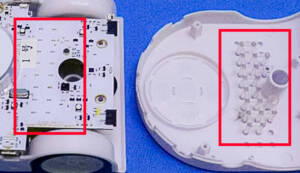
Another interesting detail revealed by the FCC teardown photos may be a redesigned LED lighting system.
Looking closely at the underside of the upper shell, there appears to be an array of molded light pipes positioned directly beneath the LEGO-compatible stud area. The pattern closely matches a row of LEDs visible on the main circuit board.
This suggests that Thymio 3 may use the LEGO-compatible stud section as part of its visual display system, allowing light from internal LEDs to be transmitted through the shell using dedicated light guides.
If this interpretation is correct, the result could be more sophisticated lighting effects than those found on previous Thymio models, while still preserving LEGO compatibility on the top surface.
The design is particularly clever because the same structure appears to serve two purposes:
- LEGO-compatible mounting points for construction projects
- Diffused LED lighting for visual feedback and animations
While Mobsya has not yet published detailed information about the new lighting system, the internal photographs strongly suggest that the LED display capabilities of Thymio 3 have received significant attention during the redesign.
For students, this could mean richer visual feedback, more expressive robot behaviors, and potentially new opportunities for programming light-based animations, notifications, and interactive projects.
What Are People Building With Thymio 3?

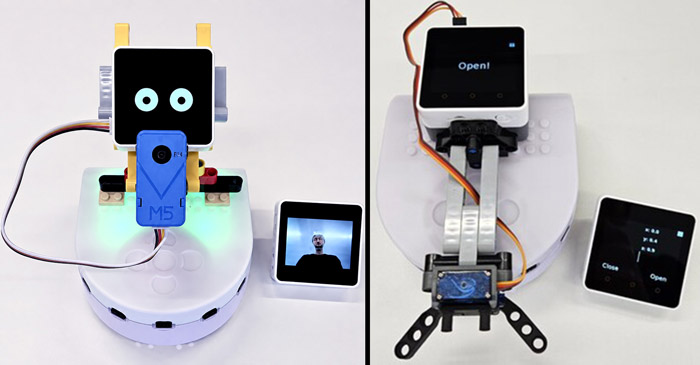
One of the most interesting discoveries during our research came from community projects already being developed around the new platform.
Several projects combine Thymio 3 with:
- Web Bluetooth
- MQTT communication
- Wi-Fi networking
- AI cameras
- Computer vision
- Robotic grippers
- Remote control systems
One particularly interesting example uses an M5Stack AI camera mounted on a Thymio 3 robot.
The camera performs face detection and sends commands wirelessly to the robot, allowing it to track and follow a person autonomously.
Projects like these suggest that Thymio 3 may be expanding beyond traditional classroom robotics and into areas such as connected devices, computer vision, and embedded systems.
Is It Worth Upgrading?
That will likely depend on how Thymio is currently being used.
For educators focused on introductory robotics, programming fundamentals, and existing classroom activities, Thymio II remains an exceptionally capable platform.
Many of the core educational experiences remain unchanged.
For educators interested in Python, wireless communication, IoT, or advanced software development, Thymio 3 introduces capabilities that were previously unavailable or required additional hardware.
Perhaps the most interesting question isn’t whether Thymio 3 is better than Thymio II.
It’s whether the two robots are ultimately serving the same audience.
At first glance, Thymio 3 appears to extend the platform into more advanced technical areas while preserving its educational roots. How that balance will be received by teachers, students, resellers, and the wider Thymio community remains to be seen.
Final Impressions of Thymio 3
Based on the information currently available, Thymio 3 appears to be a substantial technical upgrade rather than a simple refresh.
Bluetooth connectivity, MicroPython support, a dual-processor architecture, additional sensors, and modern software integrations all point toward a more capable platform.
At the same time, much of what made Thymio successful was never about hardware specifications. It was about accessibility, classroom adoption, and the educational ecosystem built around the robot over many years.
Many of the new features appear aimed at expanding Thymio into areas such as IoT, computer vision, wireless communication, and embedded systems. For advanced students and makers, those additions could open up exciting new possibilities.
For classrooms already using Thymio II, however, the picture is less clear. The original robot remains an incredibly capable educational tool, and many of the lessons, projects, and activities developed over the years continue to be just as relevant today.
As more information becomes available, we’ll continue exploring what these changes mean for educators and students.
For now, Thymio 3 looks less like a direct replacement for Thymio II and more like the next chapter in the evolution of the Thymio platform.
One thing’s for sure: we’ll continue creating new lessons, challenges, and classroom activities using Thymio II, the LinkVest, and our 5-device remote system. Together, they open up a wide range of engaging robotics projects that our students have been enjoying for years, and we’re excited to keep building on that foundation while watching where Thymio 3 goes next.
🇫🇷 Lire cet article en français
Many Thymio users are located in Switzerland, France, Belgium, and other French-speaking regions. We’ve also published a French version of this article:
Premières impressions du robot éducatif Thymio 3 de Mobsya (analyse avant lancement)