
By Jeremy|2026-04-10T23:25:39+09:002026-04-10|Tags: Apitor, Balance Scale, Mission 65, Programming Lesson, Seesaw|
This lesson combines robotics, creativity, and programming:
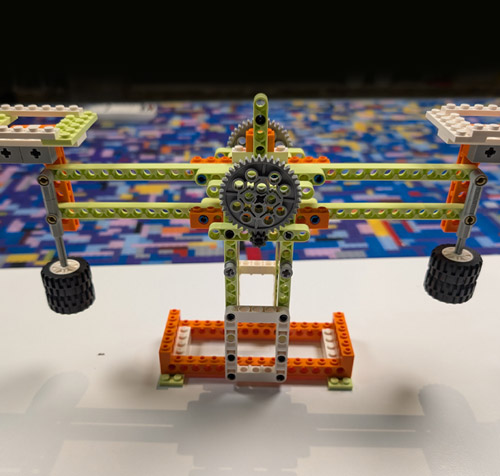
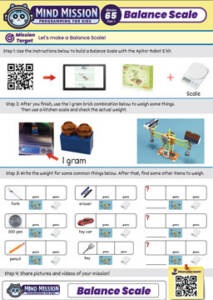
- Build the Balance Scale using the Apitor Robot E kit and use it to weigh classroom and household items.
- Use a 2×1 brick with two small studs as a 1 gram reference to estimate and compare weights.
- Modify the scale by connecting it to Thymio to create an automatic seesaw.
- Advanced: Attach a rubber band and counterweight to help stabilize the system.
- Advanced: Use flags and Thymio’s sensors to create a self-leveling balance that adjusts when the weight changes.
Solution Notes:
Balance Scale Lesson Key Concepts
Build a Balance Scale and explore how robotics, measurement, and programming work together in a hands-on way! This lesson blends experimentation, engineering, and problem-solving using Apitor and Thymio:
- Build the Balance Scale using the Apitor Robot E kit and use it to weigh different items.
- Use a 2×1 brick with two small studs as a 1 gram reference to estimate and compare weights.
- Modify the build to connect with Thymio and create an automatic seesaw.
- Advanced: Add a rubber band and counterweight to help stabilize the system.
- Advanced: Use flags and Thymio’s sensors to create a self-leveling balance that adjusts when weight changes.
Lesson Overview
In this lesson, students will:
- Build a Balance Scale using the Apitor Robot E kit.
- Measure and compare weights of classroom and household items using a 1 gram reference brick.
- Modify the scale and connect it to Thymio to create a moving seesaw system.
- Build a self-leveling system using sensors, flags, and counterweights.
By the end of this lesson, students will understand how balance, force, and programming can be combined to create interactive mechanical systems.
Important Notes:
Accuracy depends on proper balance and alignment of the scale. Make sure both sides are evenly built and move freely. When using Thymio, small adjustments in movement can greatly affect the balance, so test carefully.
Tips for this Lesson:
- Use the 1 gram reference brick to calibrate your scale before testing other items.
- Make sure the beam moves smoothly without friction.
- Adjust the counterweight gradually to improve balance.
- Position flags clearly so Thymio’s sensors can detect them reliably.
Products/Materials
The following products and resources can be used in this lesson:
Thymio II Robot
Apitor Robot E Kit
LinkVest
Classroom and household items
FUN FACT!
Did you know that balance scales have been used for thousands of years? They are one of the oldest tools for measuring weight and are still used today in science, medicine, and trade!
Download the Lesson PDF Files Below:
Check out the video tutorial/solutions below:
